
Intersectionality Research Salons™
Fashioned upon A'Lelia Walker's Dark Tower Salons, we envision our Intersectionality Research Salons to be a welcoming and open space, albeit virtual, for salon guests and salonistes (our fancy word for salon attendees) to chat, discuss, ask questions, and share resources about all things intersectionality research-related.
Salons are usually held the second Wednesday of the month at 5PM-6:30PM US ET. They are free. Registration is required.
In the last year, we have featured guests such as Patricia Hill Collins, PhD, Jennifer Gómez, PhD, Zakiya Luna, PhD, MSW, Whitney Pirtle, PhD, Sarah Richardson, PhD, Elle Lett, MD, PhD, members of the Cite Black Women Collective, Isis Settles, PhD, Lanice Avery PhD, and more. Although we have guests hosts from time to time, most Salons are hosted by ITI CEO and Founder, Lisa Bowleg, PhD, MA.
Watch video snippets from past Salons on our YouTube Intersectionality Research Salons Playlist.

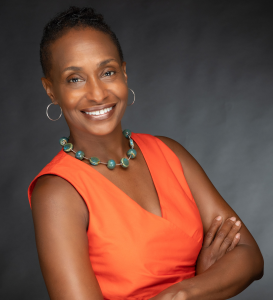
Ndidiamaka Amutah-Onukagha, PhD, MPH, CHES, FNAP
Disrupting Gendered Racism to Advance Health Equity for Black Women and Birthing People: The Power of the MOTHER Lab
Stunning but true: Black women in the U.S. have rates of pregnancy-related mortality and morbidity more than three times higher that of their white counterparts. Moreover, higher education and incomes provide no buffer from these inequities. Although numerous studies have examined the role of biology and Black women’s behaviors as contributors, Dr. Ndidiamaka Amutah-Onukagha’s own lived experience and research document that gendered racism is a formidable obstacle to positive birth outcomes for Black women in the U.S. Amutah-Onukagha is the legendary founder and director of the Center for Maternal Health Advancement, one of the first centers dedicated nationwide to addressing maternal health inequities. She is also the founder and director of the MOTHER (Maternal for Translational Health Equity Research) Lab — hands down one of the best acronyms for a research lab in history! The goal of the MOTHER Lab, the largest maternal health research lab in U.S is to address and eradicate Black women and people’s pregnancy-related inequities through research, advocacy and mentorship. Amutah-Onukagha’s work exemplifies the transformative power of community-engaged research, activism and practice. If you’re seeking some inspiration amid abundant darkness, this is the salon for you.
Ndidi Amutah-Onukagha, PhD, MPH, CHES, FNAP is the Julia A. Okoro Professor of Black Maternal Health in the Department of Public Health and Community Medicine at Tufts University School of Medicine. Her current research interests include maternal health inequities, reproductive health and social justice, infant mortality, and HIV/ in Black women. Dr. Amutah-Onukagha also serves as the inaugural Assistant Dean of Diversity, Equity, and Inclusion for Public Health and Professional Degree Programs. In 2022 Dr. Amutah-Onukagha founded the Center for Black Maternal Health and Reproductive Justice (CBMHRJ) at Tufts University School of Medicine. Her groundbreaking research and advocacy have earned her numerous accolades, including the 2023 Humanitarian of the Year Award from the March of Dimes and recognition as one of the 2020 Top 40 under 40 Minority Leaders in Healthcare. Her expertise has been featured in major outlets such as The New York Times, The Lancet, MSNBC, USA Today, and a TEDx talk titled "A Broken Healthcare System: Racism and Maternal Health."
Reading Recommendations
Amutah-Onukagha, N. (2022). A broken healthcare system: Racism and maternal health. Retrieved March from https://www.ted.com/talks/dr_ndidiamaka_amutah_onukagha_a_broken_healthcare_system_racism_and_maternal_health
Amutah-Onukagha, N., Yada, F. N., & Olden, H. A. (2025). Advancing birth quality by bridging historical and contemporary gaps in black maternal health. Journal of Obstetric, Gynecologic, and Neonatal Nursing: JOGNN, 54(3), 332–333. https://doi.org/10.1016/j.jogn.2025.03.003
Yada, F. N., Huber, L. R. B., Brown, C. S., Olorunsaiye, C. Z., Glass, T. S., & Amutah-Onukhaga, N. (2024). Labor and delivery characteristics by detailed maternal nativity across the black diaspora: Place and method of delivery. Journal of Racial and Ethnic Health Disparities. https://doi.org/10.1007/s40615-024-02120-y





Watch video snippets from previous Salons:
April 2026 with Jasmine Abrams, PhD: My career journey as an academic entrepreneur
March 2026 with Nivedita Menon, PhD: A discussion about recently passed laws affecting trans people in India, and the concept of self-determination
September 2025 with Shawnika Hull, PhD: Why intersectionality is so relevant to understanding the issue with Black women and PReP
August 2025 with Zakiya Luna, PhD MSW and Whitney Pirtle, PhD: Why mention Black feminisms when discussing intersectionality?
June 2025 with Elle Lett, MD, PhD and Fatima Hyacinthe, PhD: How to examine joy when the examination of it might harm it?
View all previous Salons, resources, readings and videos in the Intersectionality Collective.

The Polyglot InDI (Intersectional Discrimination Index): Lessons from Self-Reported Measures of Intersectional Discrimination in English, Spanish, and Brazilian Portuguese with João Bastos, PhD; Ana María del Rio González, PhD, MS; Ayden Scheim, PhD
Fala Portuguese? Habla Espanol? Speak English? Developing and validating strong self-report measures of intersectional discrimination is essential for quantitative intersectionality research. If you speak any (or all )of those languages or conduct intersectional discrimination research with people that do, this team of intersectionality researchers has you covered. Dr. Ayden Scheim, a co-developer with Dr. Greta Bauer of the InDI (intersectional Discrimination Index) and Dr. João Bastos and Dr. Ana María del Río González, who collaborated with Dr. Scheim on the validation of the Brazilian Portuguese and Spanish versions of the InDI respectively, will join us to discuss all things international InDI, including the methodological strategies and challenges of adapting the InDI for different national, cultural and linguistic contexts. Interested in quantitative intersectional measurement? Curious about how people answer questions about discrimination in Spanish and (Brazilian) Portuguese? Até lá! Te veo allí! See you there!
João Luiz Bastos, PhD is an Associate Professor of Health Sciences at Simon Fraser University in Canada. Trained as a dentist (yeah, we this information surprised us too), Dr. Bastos is an expert on the health effects of racism, including the health impacts from interlocking systems of oppression. In addition to these topics, Dr. Bastos has been involved in the development of the first-ever Brazilian scale on experiences with discrimination, as well as studies on intersectionality, discrimination, and health inequities across different countries such as Australia, Brazil, and the United States.
Ana María del Rio-González, PhD, MS (ISI 2022) is an Associate Professor in the Milken Institute School of Public Health at the George Washington University. Grounded in intersectionality, Dr. del Río-González’s program of research focuses on understanding how multiple and interlocking identities (e.g., ethnicity, gender identity, and immigrant status) and the social processes associated with them (e.g., white supremacy, transphobia and xenophobia) drive health inequities among marginalized populations, especially at the intersections of race/ethnicity and sexual and gender minority status. Her work has been recognized with the 2022 “Early-Stage Investigator Award” of the Sexual and Gender Minority Research Office at the National Institutes of Health, and the Trans-Latinx DMV Community Honors “Committed Ally Award” in 2021.
Ayden I. Scheim, PhD, is a Senior Scholar of Public Policy at the Williams Institute, at the UCLA School of Law, Los Angeles, CA, and co-developed the InDI with Dr. Greta Bauer. Scheim’s research uses intersectional and participatory approaches to address health and social inequities facing sexual and gender minority populations globally. He has led national community-based research surveys of transgender health and human rights in India and Canada, funded by the National Institutes of Health and the Canadian Institutes of Health Research. He also leads evidence synthesis and measurement research, with a focus on measuring interpersonal and structural stigma.
Recommended Readings
Bastos, J. L., Gebrekristos, L. T., Dale, S. K., del Río-González, A. M., Bauer, G. R., & Scheim, A. I. (2025). The inner workings of the Intersectional Discrimination Index: (Re)assessing the internal validity of the anticipated, day-to-day, and major discrimination measures. Stigma and Health. https://doi.org/10.1037/sah0000611
Pereira, N. P., Bastos, J. L., & Lisboa, C. S. d. M. (2022). Intersectional Discrimination Index: Initial stages of cross-cultural adaptation to Brazilian Portuguese. Revista Brasileira de Epidemiologia, 25. https://doi.org/10.1590/1980-549720220028
Pereira, N. P., Lisboa, C. S. D. M., & Bastos, J. L. (2024). Psychometric evaluation of the Intersectional Discrimination Index for use in Brazil. Cadernos de Saúde Pública, 40, e00009724.
Scheim, A., & Bauer, G. R. (2019). The Intersectionality Discrimination Index: Development and validation of measures of self-reported enacted and anticipated discrimination for intercategorical analysis. Social Science and Medicine, 226, 225–235. https://doi.org/10.1016/j.socscimed.2018.12.016
Scheim, A. I., Bauer, G. R., Bastos, J. L., & Poteat, T. (2021). Advancing intersectional discrimination measures for health disparities research: Protocol for a bilingual mixed methods measurement study. JMIR Research Protocols, 10(8), e30987. https://doi.org/10.2196/30987

TRANSforming Health: Intersectional and Community-Engaged Pathways to Health Equity for Transgender and LGBQ+ People with Tonia Poteat, PhD, PA-C, MPH
The structural oppression of transgender people is yet another devasting hallmark of this era of retrenchment. On the day of this writing alone (February 20, 2026), The New York Times reported that Kansas, Idaho, Utah and Oklahoma have introduced legislation to restrict the rights of transgender people, and that NYU Langone Health had terminated its gender medicine program for minors citing the “current regulatory environment.” In the midst of these obstacles, Dr. Poteat’s intersectionality-informed and community-engaged projects designed to identify actionable strategies to reduce and eliminate health inequities for Black and Latina transgender people are vital, not just theoretical. Join us for this last salon of the year (yeah, we’re stunned that it’s already December too) to learn why intersectional projects such as Poteat’s impressive TRANSforming the Carolinas Project, that prioritize structural context, community-engaged research, and policy change are an essential direction for intersectional work. We’ll also ask Dr. Poteat what sustains her and her work in the wake of the unrelenting attacks on transgender people in the U.S.
You know how they call celebrities who can sing, dance and act “triple threats”? Dr. Tonia Poteat, PhD, PA-C, MPH is the academic version of the “quadruple threat”: a clinician, community-engaged researcher, teacher and intellectual activist. Internationally renowned, Dr. Poteat has a demonstrably strong and long commitment to providing quality care and conducting research to help advance health equity for transgender people. Poteat is a clinician and public health scientist with more than 20 years of experience as a certified physician assistant and more than a decade of experience conducting community-engaged research. She is currently a Professor in the Duke University School of Nursing, a Research Professor of Global Health, the Associate Director of the Duke Center for AIDS Research (CFAR) Developmental Core, and Co-Director of the Duke Sexual and Gender Minority Wellness Program. She has also held faculty positions at the University of North Carolina (UNC) at Chapel Hill, including serving as an Associate Professor of Social Medicine and Core Faculty at the Center for Health Equity Research. Dr. Poteat is certified as an HIV Specialist by the American Academy of HIV Medicine and as a Gender Specialist by the World Professional Association for Transgender Health.
Reading Recommendations
Poteat, T. C., Ehrig, M., Ahmadi, H., Malik, M., Reisner, S. L., Radix, A. E., Malone, J., Cannon, C., Streed, C. G., Toribio, M., Cortina, C., Rich, A., Mayer, K. H., DuBois, L. Z., Juster, R.-P., Wirtz, A. L., & Perreira, K. M. (2025). Hormones, stress, and heart disease in transgender women with HIV in LITE Plus. American Journal of Preventive Medicine, 68(2), 245–256. https://doi.org/10.1016/j.amepre.2024.10.001
Poteat, T. C., Linton, S. L., Wirtz, A. L., Gutierrez, C., Adams, D., Brown, C., Miller, M., Mitchell, D. N., DeAngelis, R., Kornbluh, W., & Reisner, S. L. (2025). Structural drivers of health among transgender women in the United States: A nationwide study. Health & Place, 95, 103511. https://doi.org/https://doi.org/10.1016/j.healthplace.2025.103511
Poteat, T., & Simmons, A. (2022). Intersectional structural stigma, community priorities, and opportunities for transgender health equity: Findings from TRANSforming the Carolinas. Journal of Law, Medicine & Ethics, 50(3), 443–455. https://doi.org/10.1017/jme.2022.86